Continuing our journey, after looking at ‘Cocktails of the 1800s’, traveling further into the fifty-year period between the end of the American Civil War (1861–1865), and the outbreak of World War I (1914–1918), a period considered by many as the ‘Golden Age of Cocktails’. Let’s take a look at the first decade of the 1900’s, at cocktails created and popular at the start of the 20th Century.
In Australia, over two-decades of negotiating came to a close, with Federation in 1901 of the States of Australia into one nation. The 1890’s had been a period of economic downturn and the country entered the 1900’s with significant enthusiasm and progressive vigor.
In the United States, in 1901 President McKinley was assassinated and was replaced by President Teddy Roosevelt (the ‘Bull Moose’) who would see out most of the rest of this decade as the President, he was a progressive, who oversaw a period of dramatic industrial and technological change in the USA. During this decade, Einstein publishes the ‘theory of relativity’ (1905), the Wright Brothers make their first powered flight (1903), the FBI (1908), Harley-Davidson Company (1903), Ford Motor Company (1903) are formed. Most importantly for Cocktails, bar culture is on the rise and the Pure Food and Drug Act (1906) is passed, putting an end to outrageous health claims and many of the more dangerous ingredients and formulations.
In England, the Second Boer War (1899–1902) was underway, a encounter that was the eventual catalyst for reversing imperialism, preparing England for WWI and starting a series of public health reforms. Like the USA, England is undergoing significant industrial and technological change. Health standards are also in dire need of reformation. As an example, 6,000 beer drinkers are poisoned with arsenic in brewing sugars in 1900 in North West England, resulting in 70 deaths. Queen Victoria dies in 1901 and King Edward is crowned, and in the same year Marconi receives the first transatlantic radio signal. The vacuum cleaner, submarine, electrical train, electric vacuum tube (precursor to the transistor), the chocolate bar, taxis (cabs), colour film (movies) and supermarkets are invented or introduced. On 12 May 1905, Emmeline Pankhurst leads the first public protest by the suffragettes at Westminster.
Perhaps most important of all, ice and refrigeration. Ice no longer needed to be ‘cut and transported’ from cold regions. Although the first commercial ice-making machine was created in 1854, hotels, bars, restaurants and commercial operations didn’t really have economically available and reliable systems until the start of the 1900s. This innovation, more than anything else, enabled ‘cocktail’ advancement and proliferation. Since ice and cold-served drinks are at the heart of most of these beverages.
Home refrigeration didn’t exist before 1913, the Frigidaire single-unit (Fridge) was invented in 1923, and the market didn’t open up until the 1930’s and become economic for most families until the 1950’s. The ability to make cocktails-at-home (or in Lock-down – ‘Lock-tails’) has only been with us for less than 70-years.
BOOKS – THE RECORD OF EARLY 1900’s COCKTAILS
We largely understand the cocktail history of the period from the books and articles published in the early 1900’s, as well as early movie appearances. The World was still a very isolated place, and many ancient cocktails from around the world (the Mojito, Caipirinha, and many others), were only just starting to turn up in countries like the United States and England. Some of the historical references for this period are included in the list below:
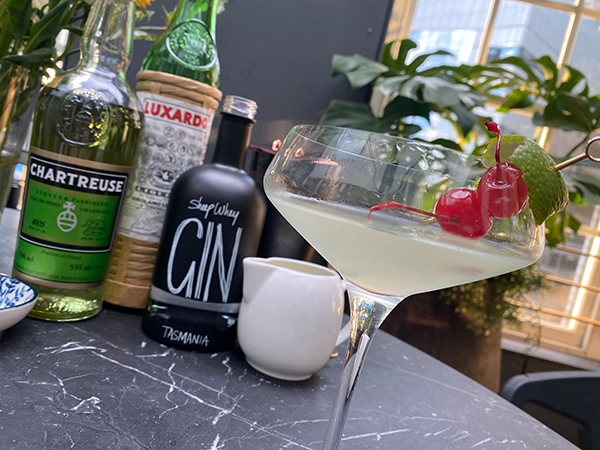
1900 – Harry Johnson, Bartenders’ Manual of How to Mix Drinks in the Present Style (new and improved illustrated edition), considered the “father of professional bar-tending”, and the first print appearance of the ‘Bijou’ cocktail with a Green Chartreuse base, see the ‘Covid Tailspin’ lock-tail #011.
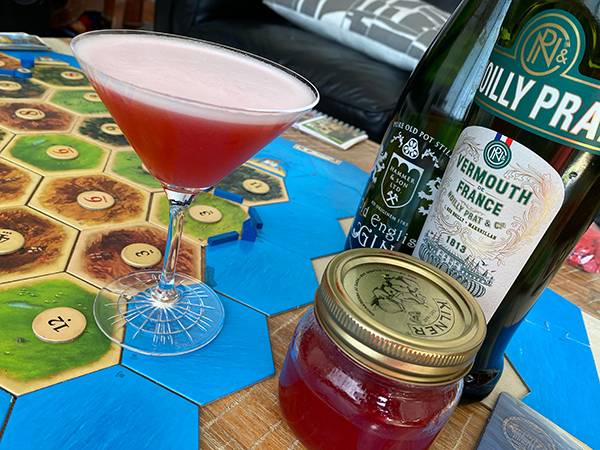
1901 – ‘New York Press’ first appearance of a recipe for the Philadelphia ‘Clover Club’ lock-tail #018.
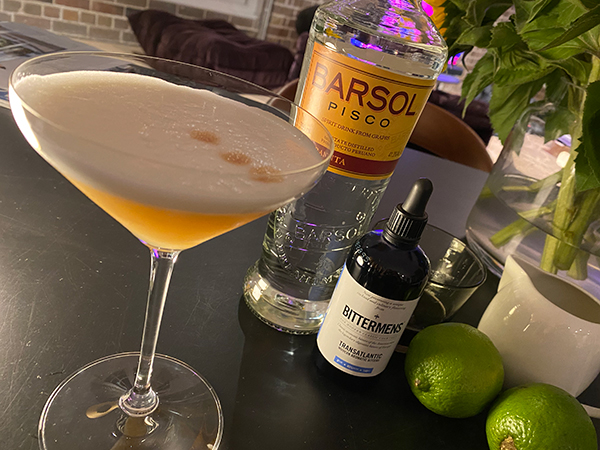
1903 – Sr. Raúl Rivera Escobar, Nuevo Manual de Cocina a la Criolla (New Manual of Creole Cooking), first in print appearance of the Pisco Sour Cocktail – lock-tail #012.
1908 – William T Boothby, The World’s Drinks and How to Mix Them, the first appearance of the Sazerac cocktail in print, as well as one of the first in-print appearances of ‘The Bronx’ cocktail (lock-tail #015) and the recipe that would win-out as the prevailing version of that drink.
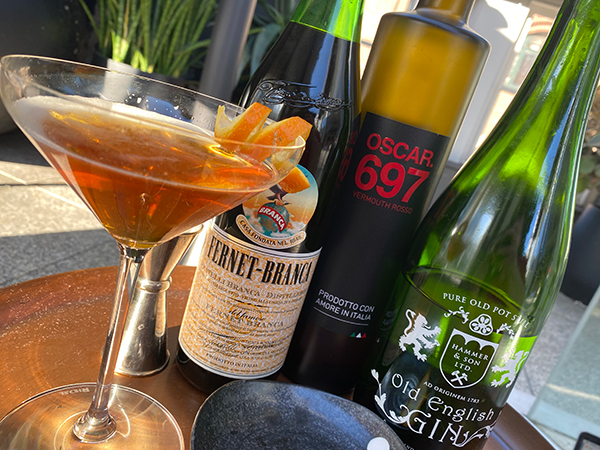
1930 – Harry Craddock, The Savoy Cocktail Book, the first appearance of the Gimlet cocktail in print, although if you read the historical notes on my re-mix, you will see a strong case for this cocktail existing in the Royal Navy since around 1867, also the in-print appearance of the Cuban Daiquiri – lock-tail #013, as well as the ‘Hanky Panky’ developed by Harry’s Savoy Hotel predecessor Ada Coleman – lock-tail #019.
COCKTAILS FROM 1900 TO 1910 – THE 10 REMIXES (LOCKTAILS #011 TO #020)



FULL INGREDIENT LIST (from the 1900 to 1910 cocktail remixes)
* items shown below with asterix have already been used in the previous (1800’s) cocktail mixes.
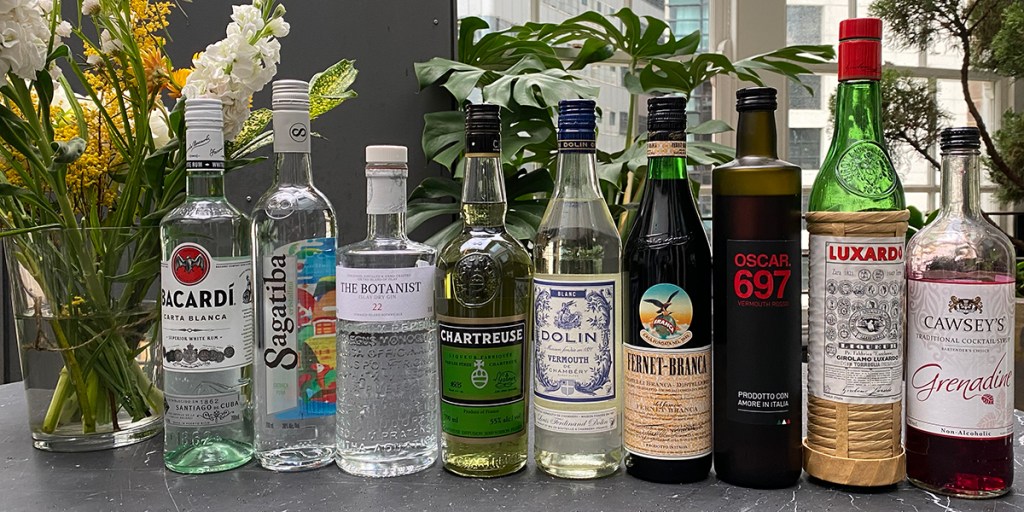
SPIRITS
– from from cocktail 011 –
Gin (The Botanist)*
Green Chartreuse
– from cocktail 012 –
Pisco (Barsol)
– from cocktail 013 –
White Rum (Bacardi)
– from cocktail 014 –
Gin (Hartshorn Sheep Whey)
– from cocktail 016 –
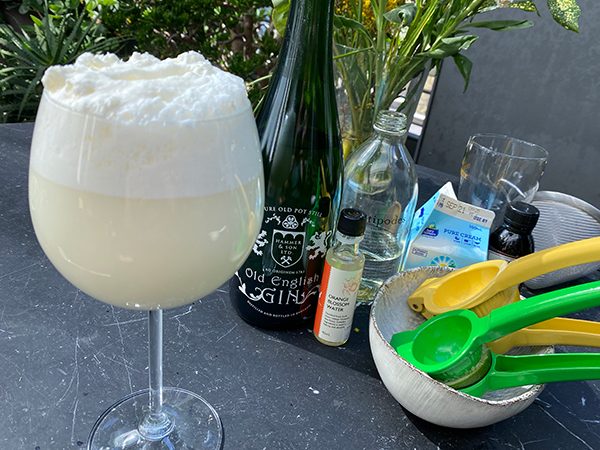
Old Tom Gin (Hammer & Son)
– from cocktail 017 –
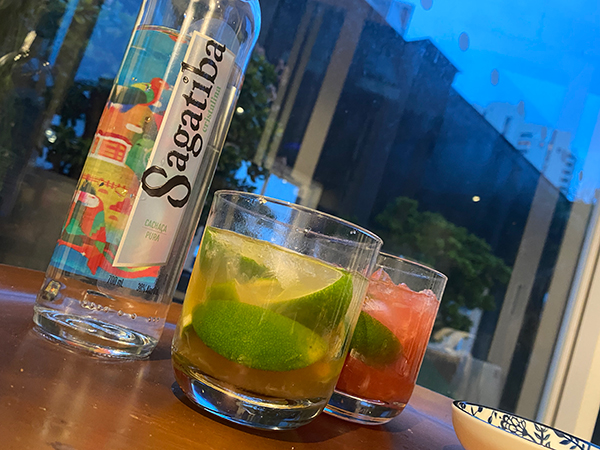
Cachaça
LIQUEURS ETC.
– from cocktail 011 –
Vermouth (Italian Sweet Red)*
Campari (Bitters)*
– from cocktail 014 –
Maraschino (Luxardo)*
– from cocktail 015 –
Lillet Blanc (Vermouth)
– from cocktail 018 –
Dry Vermouth (Noilly Prat)
– from cocktail 019 –
Fernet Branca
OTHER INGREDIENTS
– from cocktail 011 –
Orange Bitters*
Fresh Oranges*
– from cocktail 012 –
Egg (for egg white)
Sugar (for syrup)*
Bittermans Transatlantic
Fresh Limes*
– from cocktail 014 –
Maraschino (Cocktail) Cherry*
– from cocktail 015 –
Regans’ Orange Bitters No.6
– from cocktail 016 –
Fresh Lemons*
Orange Blossom Water
Vanilla Extract
Milk
Cream
Soda Water (or Mineral Water)*
– from cocktail 017 –
Brown Sugar
Raspberries
– from cocktail 020 –
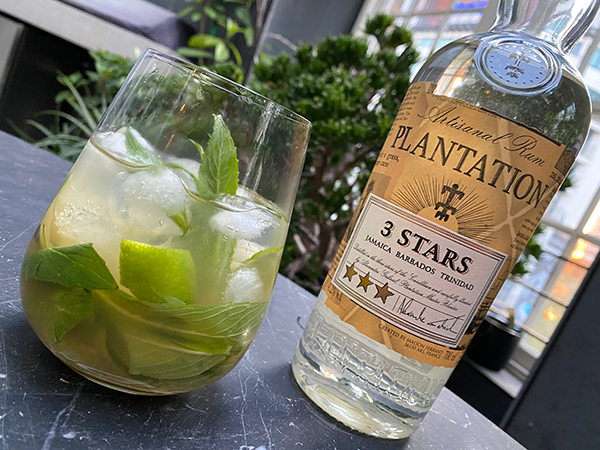
Mint (fresh)*
For the ingredients for the next 10 cocktails (1911-1920), see ingredients.
For the full index of future (and past) cocktail mixes, see index.
 Lockdown Cocktails